

Choosing the right art for your living room isn't about following a strict formula. It’s about listening to your heart, understanding your space, and finding something that makes you smile. When you tap into your personal style, consider your room's existing mood, and nail the right scale, your art won't just be an accessory—it will feel like a natural, intentional part of your home’s story.
Your Living Room Art Is Your Story
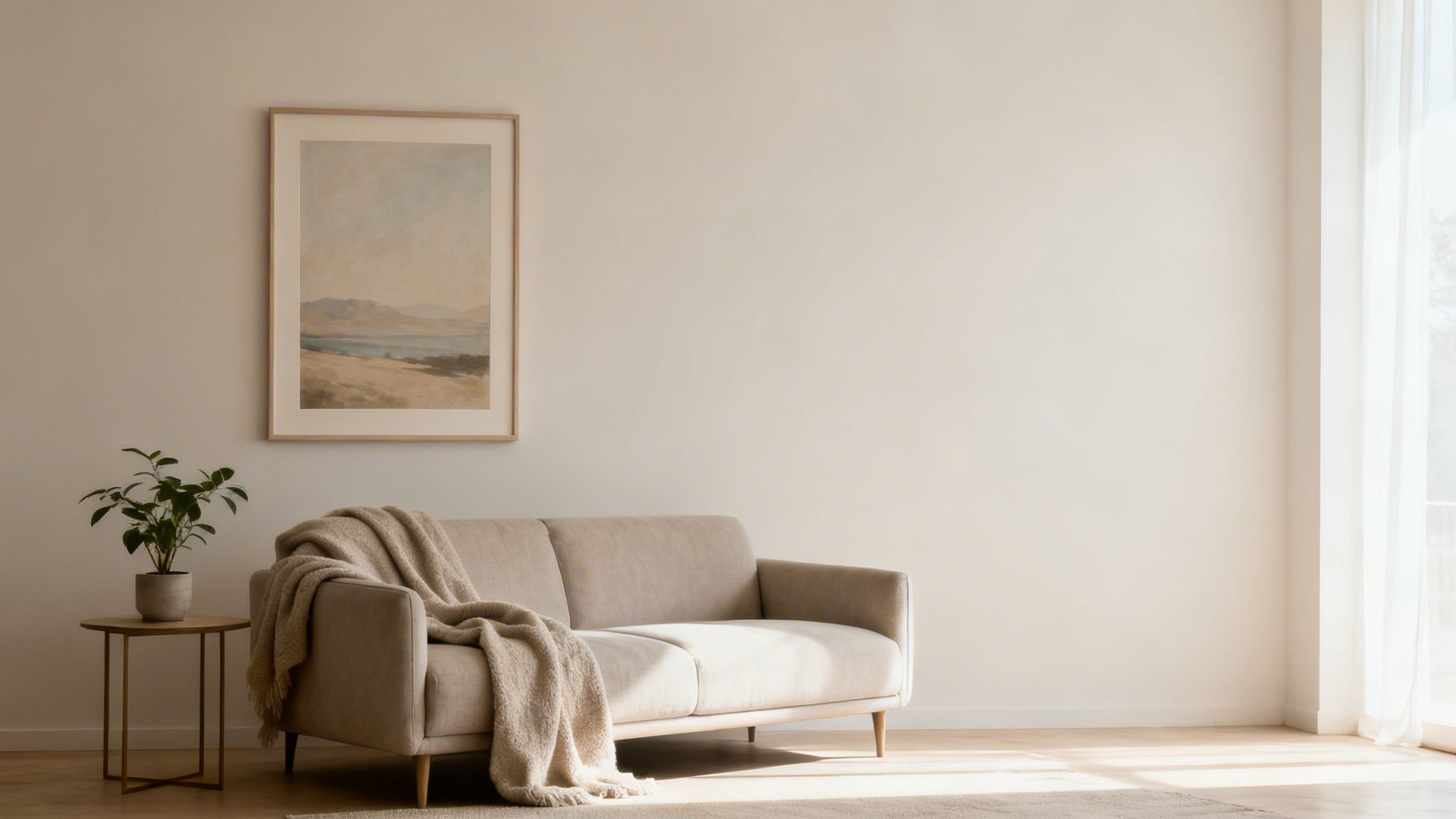
That big, empty wall staring back at you? It’s not a problem to be solved. Think of it as a canvas just waiting for a splash of your personality. I know choosing art can feel like a huge, permanent decision, but it’s one of the most rewarding parts of making a house truly feel like a home. It's your chance to express who you are without saying a single word.
This guide is here to walk you through how to choose wall art for your living room, but we’re going to skip the rigid, old-school rules. Instead, we'll focus on what truly matters: finding pieces that resonate with you. We’ll cover everything from discovering your personal style to the practical details of measuring and hanging, making sure you feel inspired, not intimidated, every step of the way.
More Than Just Decoration
Wall art is the final, essential layer of your room’s design. It’s the element that ties everything together, adds emotional depth, and can completely shift the energy of a space. The perfect piece can make a cozy room feel larger, a dark corner feel brighter, or a minimalist room burst with character. It’s a seriously powerful tool for self-expression.
This desire for personal and adaptable decor isn't just a feeling; it's a huge trend. The global wall art market is projected to skyrocket from USD 66.89 billion in 2025 to USD 145.49 billion by 2034. This growth points to a major shift: we want flexible, customizable options that can evolve with our tastes. It’s why modern solutions like FrameStory’s interchangeable fabric prints are becoming so popular—they deliver on that need for adaptable style without the waste of traditional canvases. You can explore more insights about this growing market and see how it reflects modern decorating habits.
What You'll Learn in This Guide
Think of this guide as a friendly companion on your creative journey. Instead of a list of strict "don'ts," you’ll find practical advice and a little encouragement. Here’s a peek at what we'll cover:
- Defining Your Style: We'll figure out how to pinpoint your aesthetic so your art choice feels truly authentic to you.
- Size and Placement: Simple, can't-mess-it-up rules for getting scale and proportion just right.
- Materials Matter: A look at different mediums, from classic canvases to modern fabric art.
- Curation and Arrangement: How to decide between a single, show-stopping piece or a dynamic gallery wall.
Your living room should be a collection of what you love. Wall art is not just about filling a blank space; it’s about curating a view that brings you joy every single day.
Ready? Let's start turning your living room into a space that’s not just beautiful, but uniquely you.
Discovering Your Living Room's Authentic Style
Before you even start scrolling through art online, pause for a moment and really look at your living room. What’s its personality? Is it a calm, minimalist retreat where every object has its place, or is it more of a vibrant, bohemian haven overflowing with textiles and life?
Figuring this out is the essential first step. When you understand the story your room is already telling, you can find art that feels like a natural part of that narrative, not just something you hung up to fill an empty space.
Decode Your Room’s Existing Vibe
Put on your style detective hat for a moment. What clues can you spot? Take stock of the dominant colors in your furniture, rugs, and curtains. Notice the materials you've gravitated towards—is there a lot of warm wood, sleek metal, or soft, cozy fabrics like wool and linen?
These elements all work together to create a distinct feeling. A room full of clean lines, neutral colors, and natural light probably leans modern or minimalist. On the other hand, a space packed with patterns, layered textures, and unique objects has a more eclectic or bohemian heart.
Your living room’s style isn't about fitting into a rigid category like "farmhouse" or "mid-century modern." It’s about the feeling you've already created. The art you choose should amplify that feeling, not fight against it.
Once you have a handle on the overall mood, you can start to imagine how art might enhance it. A massive, serene abstract landscape could be the perfect anchor for that minimalist room, while a lively gallery wall of mismatched prints might just be what your boho space needs to come alive.
To make things even clearer, here’s a quick guide to matching art with some popular interior styles.
Matching Art Styles to Your Living Room Vibe
This table is a great starting point for pairing your room's aesthetic with art that will feel right at home.
| Living Room Style | Recommended Art Type | Key Characteristics |
|---|---|---|
| Modern/Minimalist | Abstract Geometrics, Black & White Photography, Line Art | Clean lines, simple forms, negative space, and a focus on shape. |
| Bohemian/Eclectic | Gallery Walls, Macrame, Figurative Paintings, Textiles | A mix of patterns, textures, and global influences. Feels collected. |
| Traditional/Classic | Landscape Paintings, Framed Portraits, Botanical Prints | Timeless subjects, ornate frames, and a sense of formal balance. |
| Coastal/Nautical | Seascapes, Abstract Watercolors, Driftwood Art | Light and airy feel, cool color palettes (blues, whites), natural textures. |
| Industrial | Large-Scale Photography, Graffiti Art, Metal Sculptures | Raw materials, urban themes, bold statements, and a slightly edgy feel. |
Think of these as suggestions, not strict rules. The best spaces often come from mixing elements, but understanding the core vibe gives you a solid foundation to build upon.
Complement or Contrast Your Color Palette
Now, let's talk color—one of the most powerful tools in your design kit. You have two main strategies here: complement what you already have, or introduce a bold contrast. Neither is better than the other; they just create different effects.
-
To Complement: Look for art that picks up on colors already present in your room. Find pieces with shades that echo your sofa, your favorite throw pillows, or the dominant color in your rug. This approach creates a cohesive, serene look where the art blends seamlessly.
-
To Contrast: Go for a piece with a standout color that isn't found anywhere else in the space. A pop of fiery orange in an otherwise cool blue-and-gray room can be incredibly dynamic. This strategy immediately turns your art into a focal point, injecting a burst of energy.
A helpful guideline is the 60-30-10 rule. Roughly 60% of your room is a dominant color (like your walls), 30% is a secondary color (furniture, curtains), and the final 10% is your accent. Your new art can either pull from that existing palette or introduce a powerful new accent color.
Draw Inspiration from Your Own Story
Ultimately, the best art is always personal. The pieces that bring you the most joy are the ones that connect to your life. Your walls are the perfect opportunity to show off what you love and who you are.
Think about what inspires you:
- Travels: A beautiful photograph from a favorite trip can transport you back there every time you see it. It doesn’t have to be a famous landmark; it could be the texture of a weathered door or the unique color of the sea.
- Hobbies: Are you a musician, a gardener, a book lover? Art reflecting your passions will always feel authentic and right.
- Family: Framed memories bring so much warmth and history into a home. With modern systems like FrameStory’s interchangeable fabric art, it’s incredibly easy to swap out photos as your family grows and changes.
- Nature: Landscapes, botanicals, and abstract pieces inspired by the natural world have a timeless, calming effect that works in almost any living room.
By figuring out your room's style, deciding on a color strategy, and pulling from your own experiences, you've built a solid foundation. Now you’re no longer just looking for "something to fill a wall"—you’re searching for a piece of your story.
Mastering Scale and Placement
Have you ever walked into a room and felt like something was just… off? Often, the culprit is artwork that’s the wrong size for its space. Even a masterpiece can look awkward if it’s too small and gets lost on a large wall, or too big and completely overpowers the room.
Nailing the scale and placement is one of the most critical parts of figuring out how to choose wall art for your living room. But don't let that intimidate you. This isn’t about pulling out a calculator; it’s about a few simple, time-tested guidelines that make sure your art feels right at home.
The Foundational Rules of Thumb
Think of these as your friendly starting points, not rigid laws. Interior designers have been using them for decades for one simple reason: they work. Following them creates a visual anchor between your art and your furniture, making the entire space feel more intentional and cohesive.
Here are the two big ones to commit to memory:
- The Eye-Level Rule: Art should be hung so its center point is at average eye level, which is typically between 57 and 60 inches from the floor. This stops you and your guests from craning your necks or stooping down to get a good look. It just feels natural.
- The Furniture Rule: When hanging art above a piece of furniture—like your sofa or a console table—aim for the artwork to be about two-thirds the width of the furniture it's sitting over. This ensures the art feels proportionate and connected to the piece it’s complementing.
Pro Tip: Leave a gap of about 6 to 10 inches between the top of your sofa or console and the bottom of the frame. This gives just enough breathing room while still making the two pieces feel like a single, cohesive unit.
Visualize Before You Commit
One of the biggest fears when hanging art is making a mistake—and a dozen unnecessary nail holes. The best way to build confidence is to create a template on your wall before you even think about picking up a hammer.
Grab some painter's tape and measure out the dimensions of the art you're considering. Create a rectangle of that exact size on your wall. Then, live with it for a day or two. Does the scale feel right? This simple trick lets you test drive different sizes and placements without any commitment.
Getting scale right is a big deal in the booming wall decor market. The global wall art market hit a staggering USD 53.05 billion in 2022, largely driven by ready-to-hang pieces. With most living rooms averaging 200-400 sq. ft., design experts often suggest that art should cover roughly two-thirds of the wall space above furniture to create that perfect balance. It’s a data-backed approach to ensure your art enhances the room's flow, a key factor in a market where North America holds a massive 44.9% share. You can discover more about these wall art market trends to see how consumer tastes are shaping modern decor.
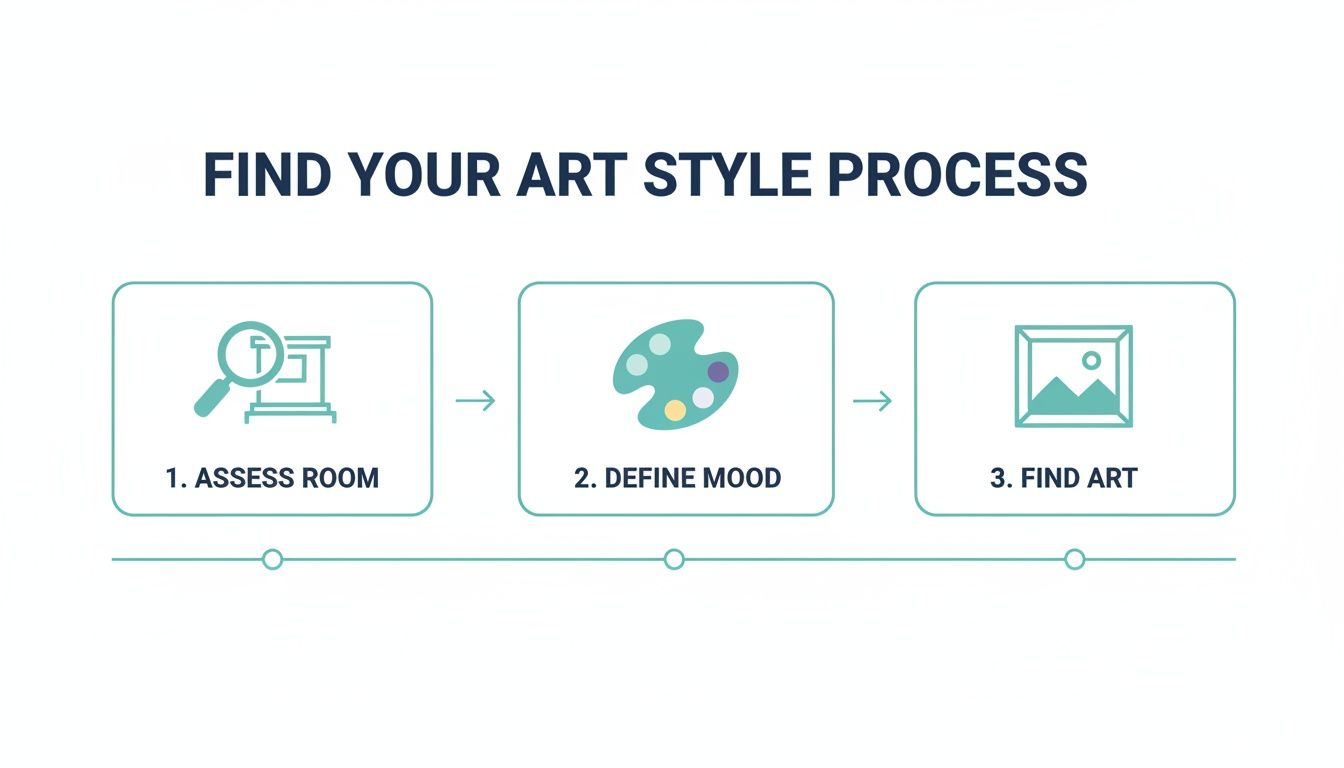
By assessing your room's unique layout and defining the mood you want to create, you build a solid foundation for choosing art that’s not just beautiful, but perfectly scaled for your home.
Consider Your Wall Space and Architecture
Let's be real: not all walls are created equal. The perfect piece for that huge, empty space above your sectional is going to be completely different from what you’d pick for that skinny wall next to the doorway.
Here’s how to tackle a few common scenarios:
- For a Large, Blank Wall: This is your moment to be bold. A single, large-scale statement piece can anchor the entire room and create a powerful focal point the second you walk in. Think 40x60 inches or even bigger.
- For a Narrow Vertical Wall: Don't try to squeeze in a tiny horizontal piece where it doesn't belong. Instead, embrace the height! A tall, slim piece of art or a stack of two or three smaller, vertically aligned frames will draw the eye upward, making the space feel taller.
- For Awkward Spaces: Got a weird corner or a wall with an off-center window? A gallery wall is your best friend here. Its flexible, organic nature lets you arrange pieces around architectural quirks, turning what was once a design challenge into a point of interest.
At the end of the day, the goal is to make your art look like it was chosen specifically for that spot. By keeping the size of both your furniture and your wall in mind, you're well on your way to getting that professionally curated look.
Exploring Different Art Mediums and Materials
The material your wall art is made of does so much more than display an image—it injects texture, depth, and personality into your living room. The medium you choose can be just as important as the artwork itself. Let’s go beyond the standard canvas and look at the rich world of materials that can really make your walls sing.
This part of the process is crucial because the material impacts everything from the overall mood to practical considerations like glare and durability.
From Classic Canvas to Modern Metal
Every material tells a different story. A classic oil on canvas gives you a sense of history and beautiful texture; you can often see the actual brushstrokes, which adds a real human touch. It feels substantial and timeless, making it a perfect fit for traditional or transitional spaces where you want the art to feel like a cherished piece.
Then you have metal prints, often printed on sleek aluminum. These have a sharp, contemporary vibe. Their high-gloss finish makes colors pop with incredible vibrancy and depth, creating an almost 3D effect. They're a fantastic choice for modern, minimalist, or industrial living rooms where you’re going for a clean, high-impact statement.
The Warmth and Texture of Fabric Art
And then there's the wonderfully soft and inviting world of fabric art. Textiles bring a warmth and tactile quality that other materials just can't replicate. This could be anything from a woven wall hanging or a vintage quilt to modern dye-sublimated fabric prints.
Fabric has a unique advantage: it absorbs sound, which can subtly soften the acoustics in a busy living room. It also diffuses light beautifully, which means you can say goodbye to the distracting glare you often get from art behind glass. That makes it a brilliant choice for bright rooms flooded with natural light.
One of the best things about modern fabric art is its versatility. Systems like FrameStory use dye-sublimation, where ink literally becomes part of the fabric. This process results in stunning, scratch-resistant color that won't peel or fade over time. It gives you the rich, textured look of a canvas but without any of the frustrating glare.
Comparing Your Options
When you're trying to land on a material, it helps to just lay out the pros and cons based on what your living room actually needs.
| Material | Best For... | Key Considerations |
|---|---|---|
| Traditional Canvas | Classic, traditional, or eclectic rooms that need texture and depth. | Can be susceptible to moisture; quality can vary dramatically. |
| Framed Photographs | Personalizing a space with memories or creating stylish gallery walls. | The glass can create serious glare; the frame choice completely changes the look. |
| Metal Prints | Modern, industrial, and minimalist spaces that need a sleek, vibrant focal point. | Can be highly reflective; fingerprints can be an issue. |
| Fabric & Textile Art | Bright rooms where glare is a problem; creating a soft, cozy atmosphere. | Offers a matte, glare-free finish and is incredibly lightweight. |
Don't Forget the Frame
A frame isn't just a border; it’s a crucial part of the whole presentation. The right frame pulls the art and your room's decor together, while the wrong one can feel totally out of place.
- Minimalist Metal Frames: Thin black, white, or silver frames have a clean, contemporary look that lets the art do all the talking.
- Classic Wood Frames: From warm oak to rich mahogany, wood frames add a natural, timeless feel. They work just as well with traditional decor as they do with a modern rustic style.
- Ornate Frames: Gilded or intricately carved frames make a bold statement. They're perfect for traditional art or for creating an interesting, eclectic contrast with a modern piece.
The great thing about modern display systems is their flexibility. For instance, you can learn more about how to incorporate framed fabric wall art into your home for a custom look that’s both high-end and super easy to update. This kind of adaptability is a game-changer for anyone who loves to refresh their decor without buying a whole new piece of art. Being able to just swap out a fabric print on an existing frame keeps your living room feeling fresh and personal, season after season.
Creating a Gallery Wall vs. a Statement Piece
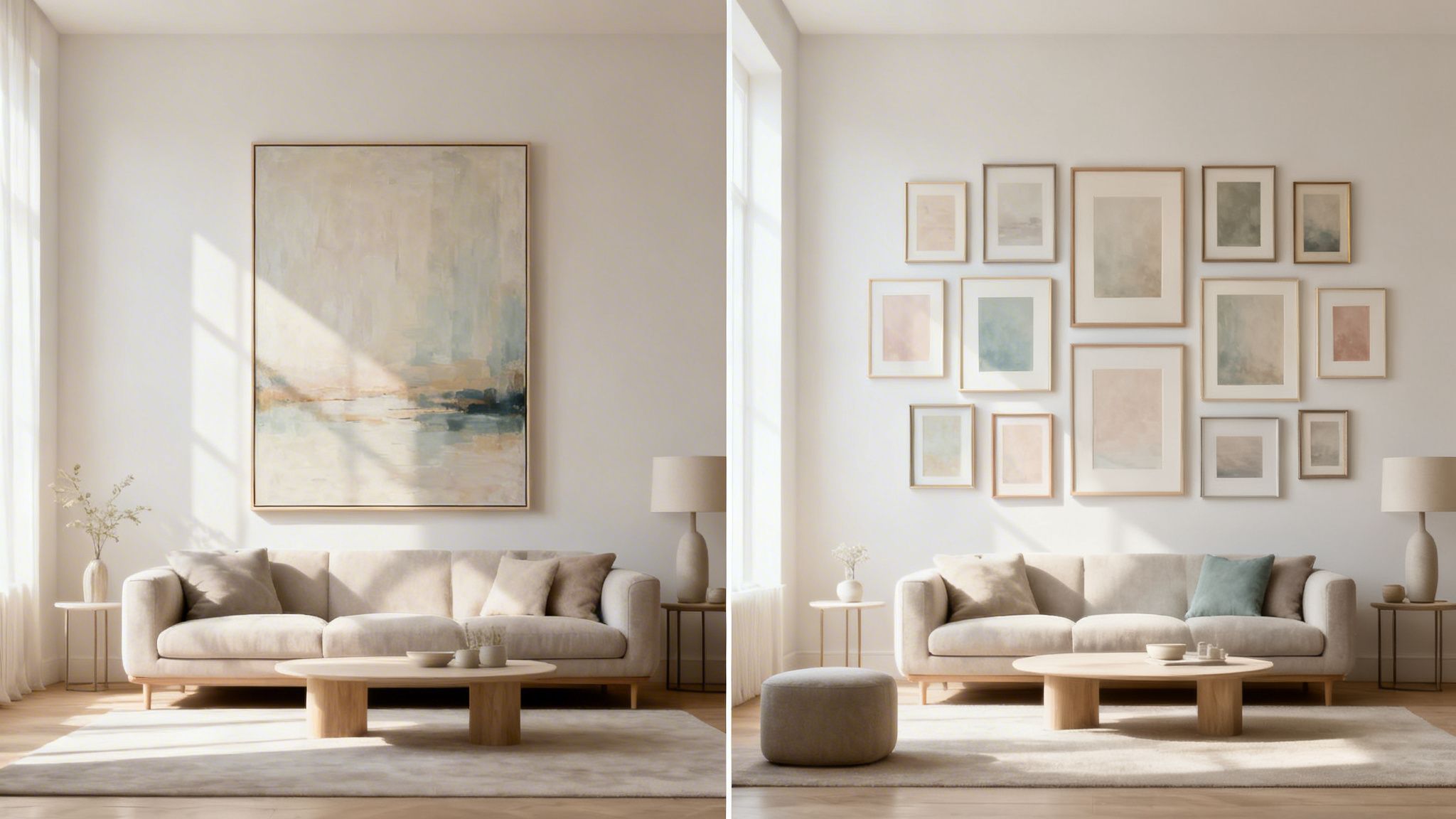
This is one of the most exciting decisions you'll make for your walls. Do you go for one dramatic, show-stopping piece, or a curated collection of smaller works? There’s no right answer—just what feels right for your space and your personality.
Both approaches have the power to completely define a room, but they achieve it in very different ways. A single, large-scale statement piece is all about confident simplicity, creating an instant focal point. On the other hand, a gallery wall tells a more complex story, weaving together different moments, styles, and memories.
The Power of a Single Statement Piece
A large piece of art is bold and intentional. It can single-handedly set the color palette and mood for your entire living room. Imagine a huge, serene landscape above your sofa; it immediately communicates a sense of calm and openness. Conversely, a massive, vibrant abstract painting can inject a powerful dose of energy and creativity.
This approach is perfect if you:
- Crave simplicity: You prefer a clean, uncluttered look and want to make a big impact without the busyness of multiple pieces.
- Have a clear focal point: You want to draw the eye directly to one spot, like the wall above your fireplace or sofa.
- Feel overwhelmed by choices: Committing to one amazing piece can feel less daunting than curating ten smaller ones.
A "statement piece" doesn't have to be a painting. It could be a large-scale photograph, an oversized textile, or a modern fabric print. The key is its commanding presence and its ability to tie all the other elements of the room together effortlessly.
The Art of the Perfect Gallery Wall
A gallery wall is deeply personal—it’s like a visual journal on your wall. It's a collection of art, photos, and objects that tell your story. This approach offers incredible flexibility and is a fantastic way to fill a large or awkwardly shaped wall. The real magic, though, lies in its cohesive curation.
Don’t just start hammering nails! Lay everything out on the floor first. Measure the wall space you want to fill, then tape off a matching rectangle on your floor. This lets you experiment with placement without turning your wall into Swiss cheese.
To keep your collection from feeling chaotic, you need a unifying thread. This doesn't mean everything has to match, but there should be a common element that ties it all together.
- Consistent Color Palette: Choose pieces that share two or three key colors. A collection of black-and-white photos mixed with abstract prints in shades of blue and gray will feel connected.
- Matching Frames: Using the same style and color of frame is the quickest way to create a unified look, even if the art inside is wildly different. A mix of thin, black gallery frames always looks sharp.
- A Common Theme: Your theme could be anything from travel photography and botanical prints to family portraits through the years. A shared subject matter creates a natural sense of belonging among the pieces.
For more inspiration, you can find a ton of creative ideas on how to arrange photos on a wall that can help you plan your perfect layout.
Ultimately, the choice between a statement piece and a gallery wall is a key step in how to choose wall art for your living room. One makes a singular, bold declaration, while the other whispers a collection of stories. Both are beautiful ways to make your space uniquely yours.
Putting the Finishing Touches on Your Wall Art
You’ve found the perfect piece—the most exciting part is nearly done! Now it's time to handle the final details that truly make your art pop. These finishing touches, like lighting and hanging hardware, are what take a good choice and turn it into a stunning focal point.
Don't underestimate this step. The right lighting can completely transform the look and feel of your artwork, drawing attention, enhancing colors, and setting the mood for the entire room.
Illuminate Your Art Correctly
Think of light as the final layer of your composition. It can bring out the rich texture in a woven piece or the deep contrasts in a black-and-white photograph. You don't need a complicated setup; even small adjustments make a huge difference.
- Dedicated Picture Lights: This is the classic choice for a reason. These fixtures mount directly above the art, casting an even, focused glow that gives your space a sophisticated, gallery-like feel.
- Track Lighting: If you have multiple pieces or love to rotate your art, adjustable track lights offer fantastic flexibility. You can aim them precisely where you need light most, changing it up whenever you want.
- Strategic Placement: Sometimes, you can just use the light you already have. Try positioning a stylish floor lamp to cast a warm, angled light on a large piece, or make sure a console lamp illuminates a smaller work nearby.
The goal is to illuminate the art without creating distracting glare or harsh shadows. A soft, ambient glow is almost always better than a direct, intense spotlight.
Hang Your Art with Confidence
Getting your art securely on the wall is crucial for both safety and presentation. The hardware you need really depends on your wall type—what works for modern drywall won't necessarily work for older plaster.
For most homes with drywall, a simple picture-hanging kit with a hook and nail is often all you need for lighter pieces under 20 pounds. For heavier art, you'll want to use a wall anchor or, even better, locate a wall stud for maximum security. Plaster walls can be a bit trickier, as they tend to crumble, and benefit from specialized hooks designed to minimize damage.
Your living room is an ever-evolving space, a true reflection of your journey. Using flexible decor solutions allows you to refresh your art seasonally or as your tastes change, keeping your home feeling alive and personal. For more great ideas, check out our guide on how to hang pictures without damaging walls—it’s especially helpful for renters or anyone who loves to switch things up often.
Your Top Wall Art Questions, Answered
Jumping into the world of wall art can bring up a few questions, especially when you’re aiming for that perfect, pulled-together look. We hear these a lot, so here are some straightforward answers to help you wrap up your living room project with total confidence.
How do I choose art for an open floor plan?
When you're dealing with an open-concept space, think of your art as a tool to create distinct "zones" without actually putting up walls. A large, commanding piece is your best bet for anchoring the main seating area—it instantly creates a visual center of gravity.
To keep the whole area from feeling disjointed, stick to a common thread with your art choices. You could pull a consistent color palette or theme through the different zones. For example, a big abstract piece with deep blues over the sofa can be beautifully echoed by smaller prints with just a hint of that same blue near your dining table. It’s a subtle trick that makes the entire space feel cohesive.
Can I mix different art styles in the same room?
Absolutely! In fact, you should. Mixing art styles is one of the best ways to inject personality into a room, giving it a dynamic vibe that feels collected over time, not just purchased in one afternoon. The secret is finding a common thread to tie it all together so it looks curated, not chaotic.
This unifying element could be something as simple as a consistent frame color (like all black or all natural wood), a shared accent color that pops up in each piece, or even a similar theme, like nature photography mixed with botanical illustrations. A gallery wall is the perfect playground for nailing this eclectic-but-cohesive look.
What are the best damage-free options for renters?
Renters, you have some fantastic options that won't jeopardize your security deposit. Your new best friend is anything lightweight. Systems like sleek aluminum frames with fabric prints are ideal because they aren't heavy, and you can change out the art without ever making a new hole.
High-quality adhesive strips and hooks are also a go-to for lighter framed pieces. And don’t underestimate the power of simply leaning your art. A large framed piece propped up on a console table, a mantel, or even stylishly placed on the floor is a chic, no-holes-needed solution.
How high should art be hung above a sofa?
The go-to designer rule is to hang art so the bottom edge is 6 to 10 inches above the back of your sofa. This little gap is crucial—it creates a visual link, making the furniture and the art feel like a single, intentional grouping instead of two random objects floating on the same wall.
But before you hammer that nail, do a quick visual check. Grab a friend to hold the piece in place while you step back and look from the other side of the room. This is the best way to confirm the height feels balanced in your space, which is ultimately the most important part of how to choose wall art for your living room.
Ready to find art that’s as flexible and personal as your own story? With FrameStory, you can easily swap stunning fabric prints on a single, elegant frame, keeping your living room fresh without the clutter or waste of traditional canvases.
Explore the FrameStory collection and start your transformation today.